The Ultimate Moist & Fluffy Coconut Cake with Tangy Cream Cheese Frosting
Jump to Recipe
This post may contain affiliate links.
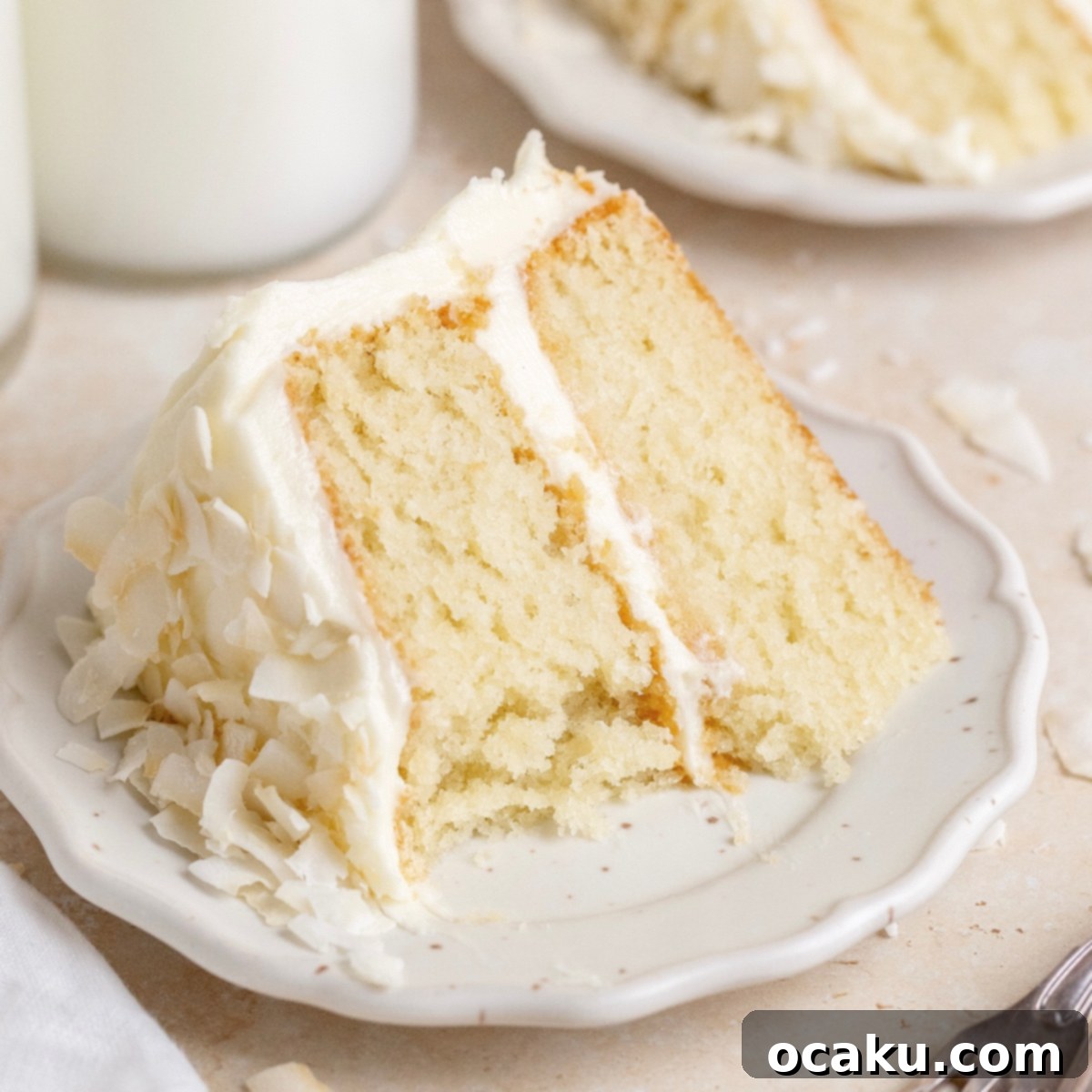
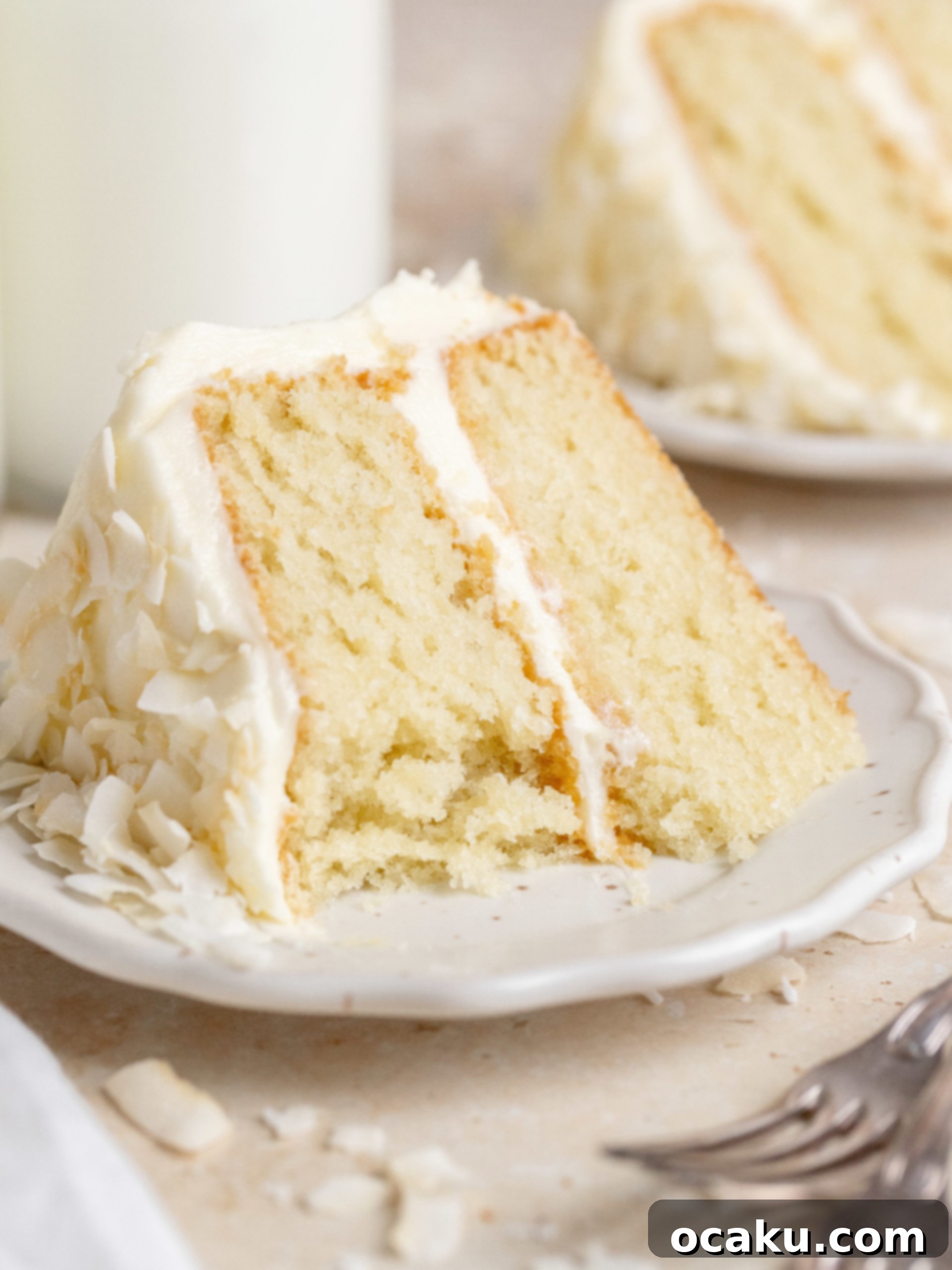
Prepare to be amazed by this truly exceptional Coconut Cake recipe! This isn’t just any coconut cake; it features two gloriously moist and incredibly fluffy cake layers, each bite bursting with intense coconut flavor. The secret lies in a carefully crafted batter that ensures a tender crumb and rich taste. Complementing these decadent layers is a luscious coconut cream cheese frosting, offering a perfect balance of sweet coconut with a delightful, subtle tang that will have everyone reaching for a second slice. Crowned with delicate toasted coconut flakes, this cake presents a beautiful finish, making it an ideal dessert for any special occasion, from festive holidays like Easter and Christmas to everyday celebrations.
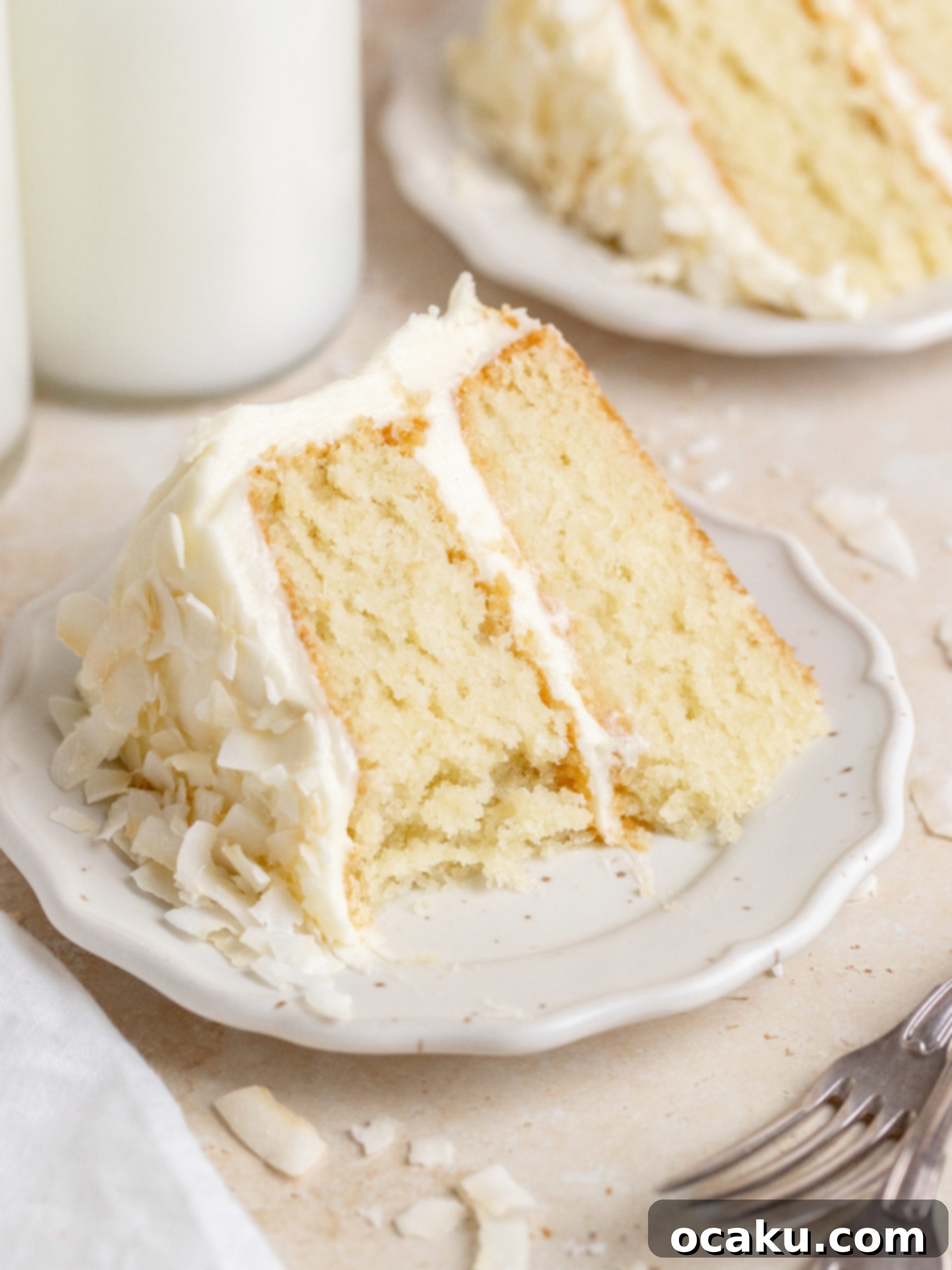
This recipe is designed to deliver a show-stopping dessert that’s both impressive to look at and a joy to eat. The combination of moist coconut cake and the irresistible coconut cream cheese frosting creates a harmonious flavor profile that’s simply divine. Whether you’re a seasoned baker or new to layer cakes, our detailed instructions and expert tips will guide you through creating this masterpiece with ease. Get ready to bake a cake that will undoubtedly become a treasured favorite in your recipe collection, perfect for sharing joy and deliciousness with friends and family.
If you’re looking for more delightful layer cake creations, be sure to explore our other recipes, such as the rich Salted Caramel Cake, the celebratory Classic Vanilla Birthday Cake, and the sophisticated Tiramisu Layer Cake. Each offers a unique and satisfying baking experience!
[feast_advanced_jump_to]
WHY THIS COCONUT CAKE RECIPE IS A MUST-TRY
- Rich Coconut Cake Layers: Our cake layers are absolutely bursting with authentic coconut flavor. We achieve this by blending unsweetened shredded coconut into a fine flour-like consistency, which ensures every crumb is infused with coconut without altering the cake’s tender texture. Additionally, full-fat coconut milk adds an extra layer of richness and moisture, making these layers truly irresistible.
- Decadent Coconut Cream Cheese Frosting: This isn’t just any frosting! The coconut cream cheese frosting perfectly complements the cake with its sweet coconut essence and a subtle, delightful tang from the cream cheese. This balance cuts through the richness, creating a wonderfully complex flavor that prevents the cake from being overly sweet and keeps you coming back for more.
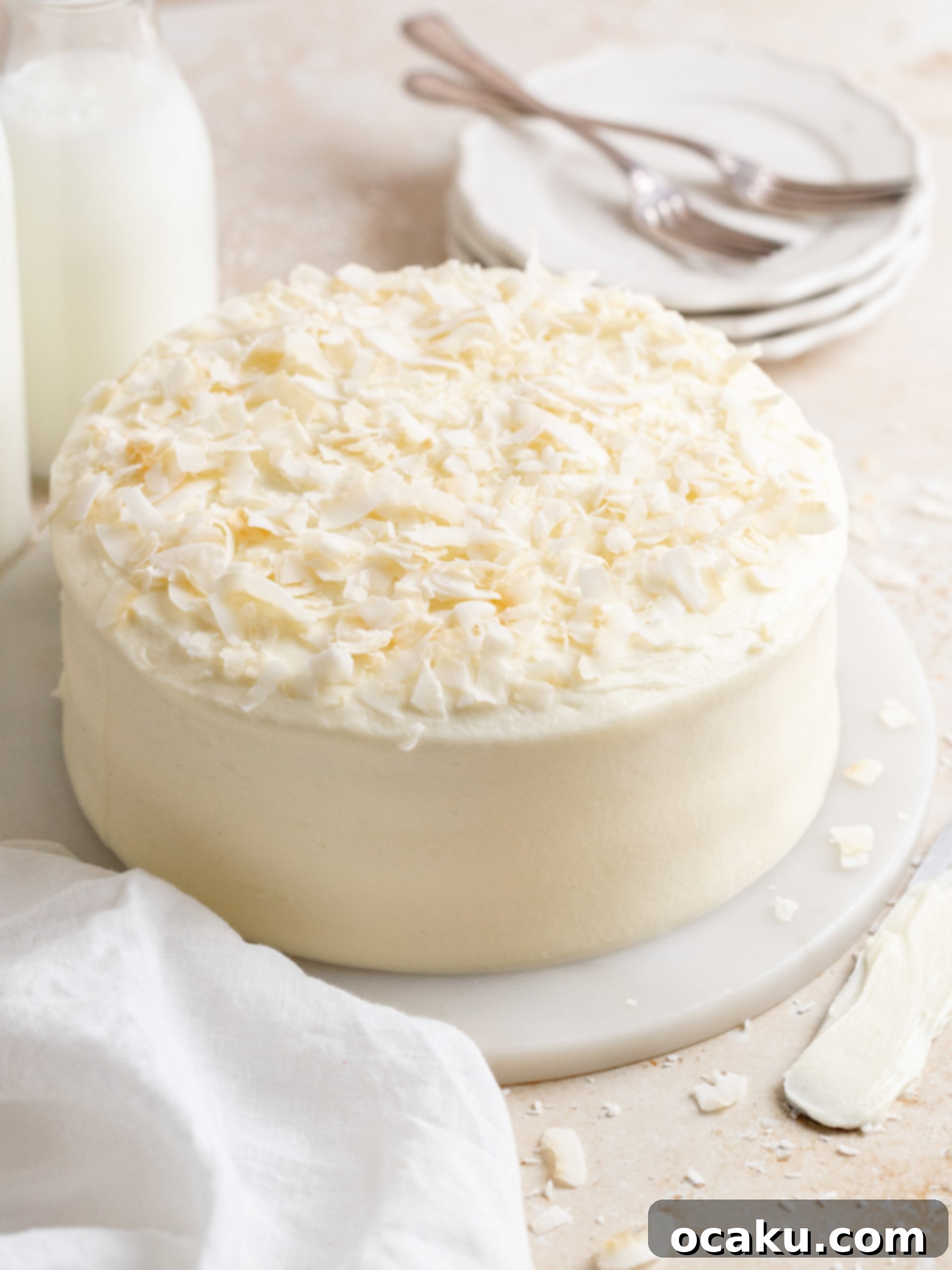
- Perfect for Any Celebration: With its elegant appearance, rich flavor, and versatile appeal, this coconut cake is an ideal centerpiece for any festive occasion. Whether you’re celebrating Easter, Christmas, birthdays, anniversaries, or simply enjoying a gathering with loved ones, this cake is guaranteed to impress and delight. Its beautiful white frosting and coconut flake garnish make it visually stunning.
- Incredibly Moist and Fluffy Texture: We’ve perfected the blend of ingredients, including sour cream and vegetable oil, to ensure these cake layers are not only moist but also wonderfully fluffy. The careful balance prevents a dry or dense cake, delivering a light yet substantial slice every time.
KEY INGREDIENT NOTES & SUBSTITUTIONS
Understanding the role of each ingredient is key to achieving the best results with this recipe. Below are some crucial notes for our coconut cake; for a complete list of ingredients and precise measurements, please refer to the recipe card at the bottom of this post.
- Butter (Unsalted): Using unsalted butter allows you to control the overall salt content of the cake. It’s crucial for both the cake layers and the frosting to have your butter at room temperature. This typically means taking it out of the fridge 1-2 hours before you plan to start baking. Room temperature butter creams beautifully with sugar, incorporating air for a light and fluffy cake texture.
- Eggs: Like butter, eggs should be at room temperature. This helps them emulsify better with the other ingredients, leading to a smoother batter and a more uniform, tender cake structure. Plan to take them out of the fridge 1-2 hours before you begin.
- Unsweetened Shredded Coconut: This ingredient is vital for the distinct coconut flavor. Blending it into a flour-like consistency before adding to the dry ingredients ensures that the coconut flavor is thoroughly distributed throughout the cake layers, providing texture and taste without being overtly chewy.
- Sour Cream: Sour cream is a secret weapon for incredibly soft and tender cakes. Its acidity helps to tenderize the gluten in the flour, while its fat content adds richness and moisture. Ensure it’s at room temperature (1-2 hours before baking) for smooth incorporation into the batter. Full-fat sour cream is recommended for the best results.
- Full-Fat Coconut Milk: To intensify the coconut flavor and provide exceptional moisture, full-fat coconut milk is essential. Its creamy texture contributes to a rich, moist crumb. Using full-fat ensures a richer flavor and better texture compared to light versions. Also, ensure it’s at room temperature to prevent the batter from seizing.
- All-Purpose Flour: Sifting the flour along with the blended coconut, baking powder, baking soda, and salt is critical. Sifting aerates the dry ingredients and removes any lumps, ensuring an even distribution and contributing to a lighter cake.
- Baking Powder & Baking Soda: These are our leavening agents. Baking powder provides lift by releasing carbon dioxide when mixed with liquid and heat, while baking soda reacts with acidic ingredients (like sour cream) to create additional rise and a tender crumb.
- Vanilla Extract & Coconut Extract: These extracts boost the overall flavor profile. Vanilla provides a classic warmth, while coconut extract enhances the natural coconut flavor, making it truly pop. The coconut extract is optional, but highly recommended for an intense coconut experience.
- Cream Cheese (Full-Fat): For the frosting, full-fat cream cheese is non-negotiable. It provides the signature tangy flavor and creamy texture that balances the sweetness. Make sure it’s softened at room temperature for about 10-15 minutes, but not too warm or it will result in a runny frosting.
STEP-BY-STEP INSTRUCTIONS – BAKING THE CAKE LAYERS
Creating this delicious Coconut Cake is a rewarding process. For best results, we recommend using a stand mixer fitted with a paddle attachment, or a robust hand mixer. You will need two 20 cm (8-inch) round baking pans, generously lined with parchment paper to prevent sticking. Please find the detailed ingredient list and full recipe card at the bottom of this page.
Begin by preheating your oven to 170ºC (340ºF) for a conventional oven. While the oven heats, meticulously prepare your two 20 cm (8-inch) baking pans by greasing them lightly and lining the bottoms with baking paper rounds. This ensures your beautiful cake layers will release easily after baking.
STEP 1: Prepare the Coconut and Dry Ingredients. Start by placing the unsweetened shredded coconut into a food processor or blender and blend until it reaches a fine, flour-like consistency. This step is crucial for distributing the coconut flavor evenly and ensuring a smooth cake texture. Once blended, sift this coconut flour together with the all-purpose flour, baking powder, baking soda, and salt into a medium bowl. Whisk briefly to combine thoroughly and set this dry mixture aside.
STEP 2: Cream the Butter and Sugar. In the large bowl of your stand mixer, fitted with the paddle attachment (or using an electric hand mixer in a large bowl), add the softened room-temperature butter and granulated sugar. Beat on medium-high speed for approximately 3 minutes, or until the mixture becomes visibly light, pale, and fluffy. This process incorporates air, which is essential for a tender cake.
STEP 3: Incorporate Eggs and First Half of Dry Ingredients. Gradually add the room-temperature eggs, one or two at a time, mixing well after each addition until just combined. Scrape down the sides of the bowl as needed to ensure everything is fully incorporated. Next, reduce the mixer speed to low and add half of the dry ingredient mixture (from Step 1). Mix gently until the flour streaks have almost disappeared, being careful not to overmix.
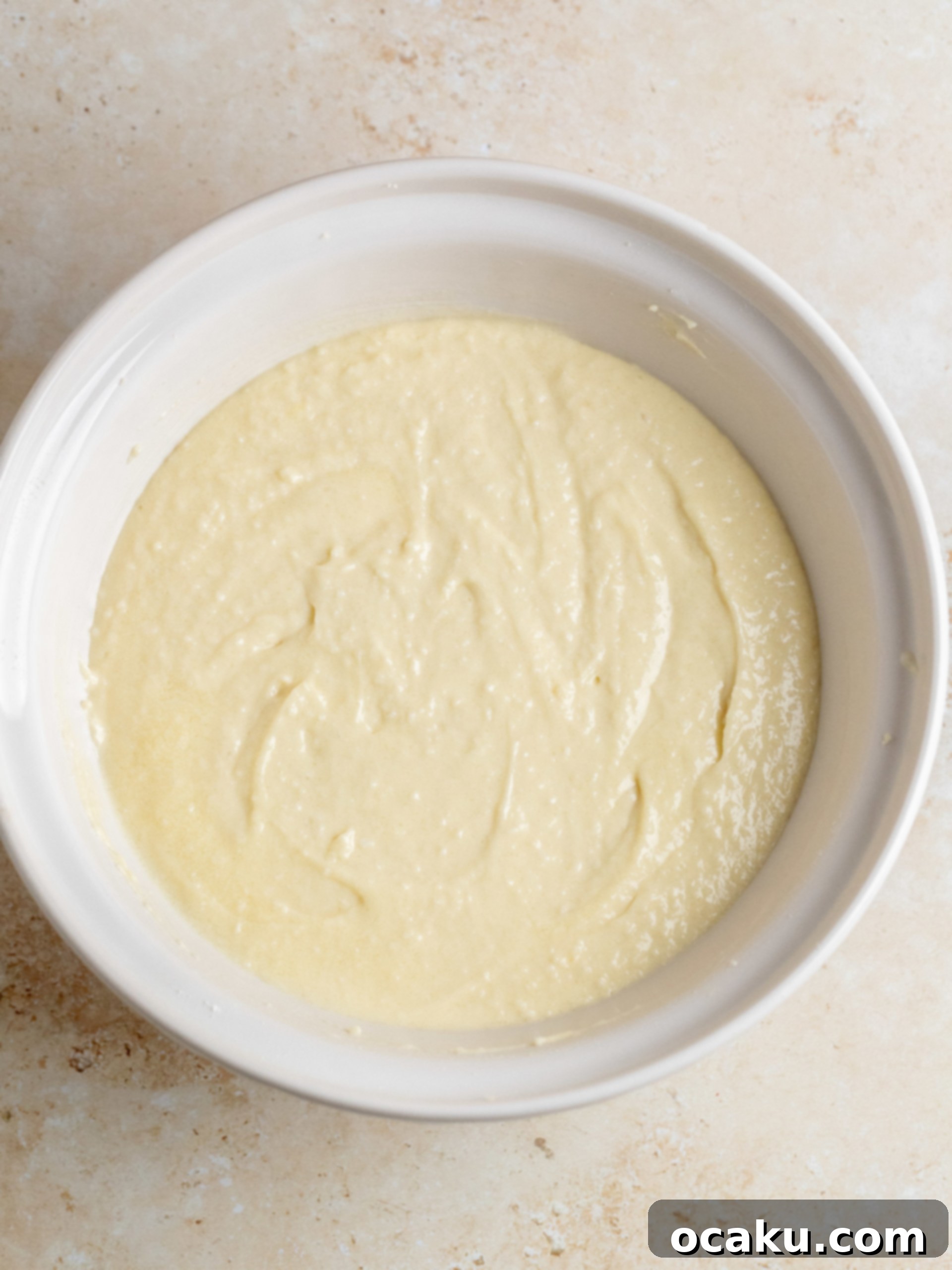
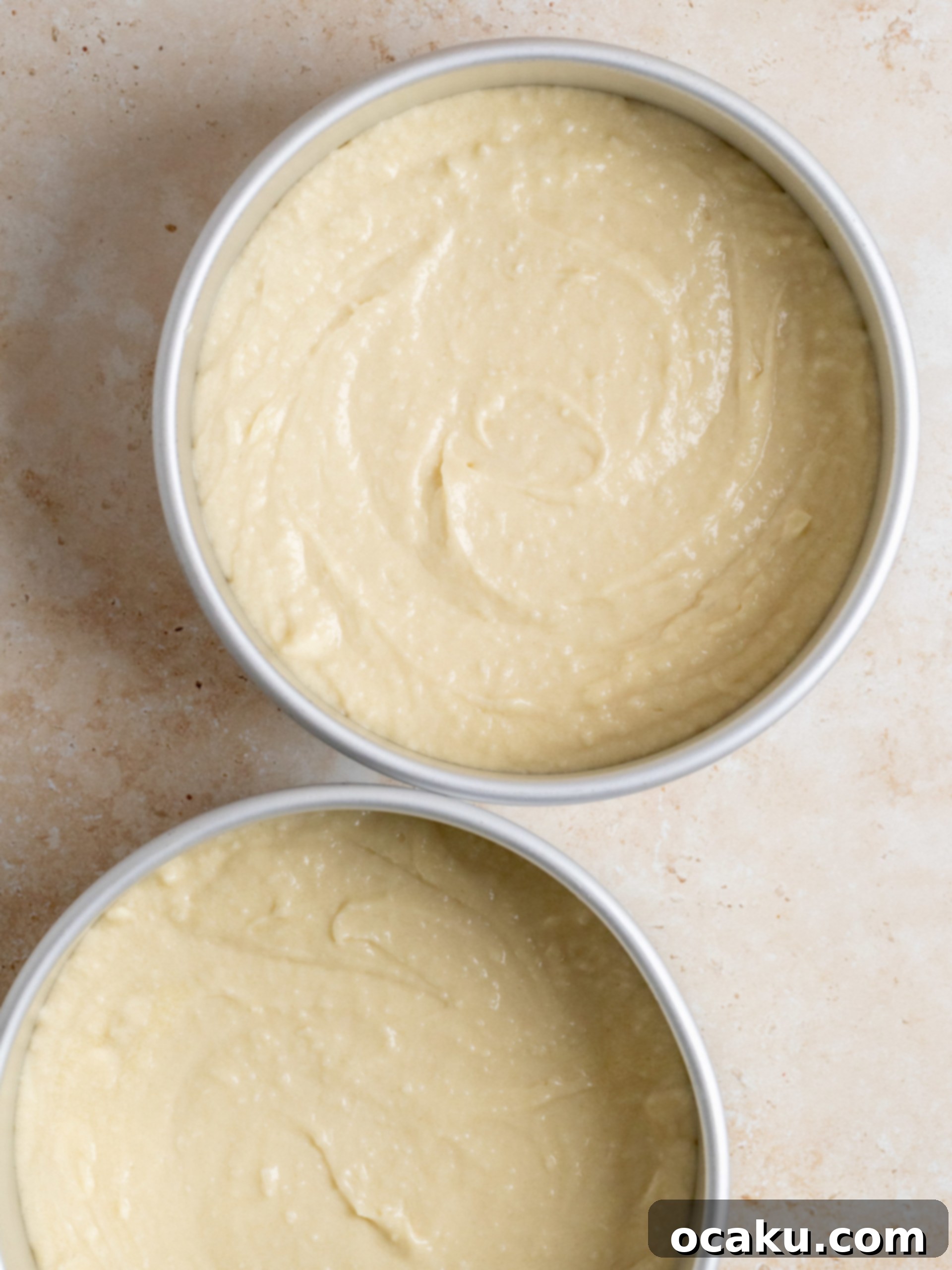
STEP 4: Add Wet Ingredients and Remaining Dry Ingredients. With the mixer still on low speed, pour in the room-temperature sour cream, full-fat coconut milk, vegetable oil, vanilla extract, and coconut extract. Mix until just combined. Then, add the remaining half of the dry ingredients and mix again on low speed until the batter is just smooth and no dry streaks remain. It’s important to avoid overmixing at this stage, as it can lead to a tough cake.
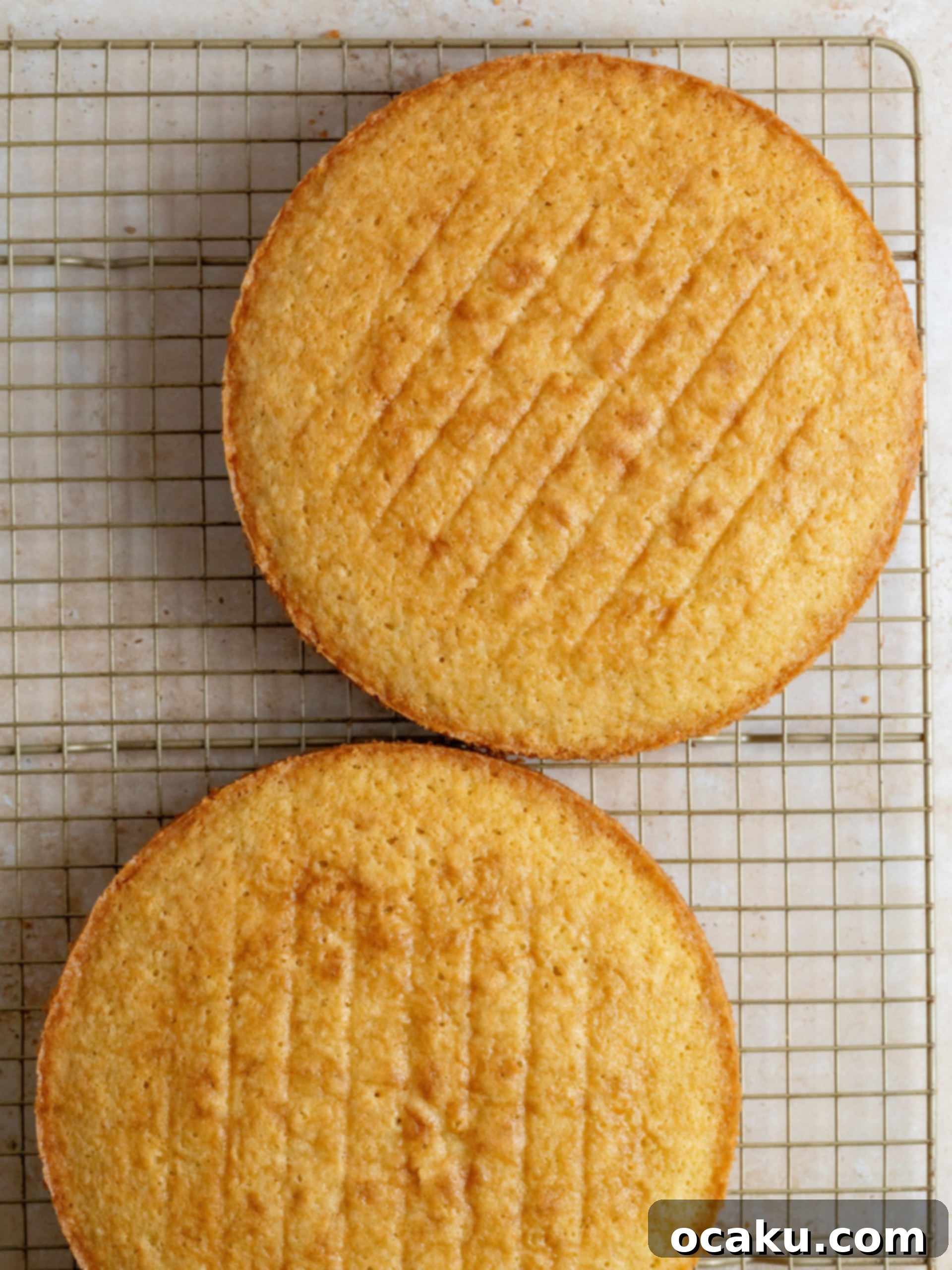
STEP 5: Bake and Cool the Cake Layers. Divide the cake batter evenly between your two prepared baking pans. Use an offset spatula to gently smooth the tops. Bake for 20-23 minutes, or until a wooden skewer or cake tester inserted into the center of the cakes comes out clean. Once baked, remove the pans from the oven and let them cool on a wire rack for about 10-15 minutes before gently inverting the cakes out of their pans. Allow the cake layers to cool completely on the wire rack before frosting. This prevents the frosting from melting.
STEP-BY-STEP INSTRUCTIONS – CREAM CHEESE FROSTING & ASSEMBLING
Now for the delightful coconut cream cheese frosting and bringing your masterpiece together!
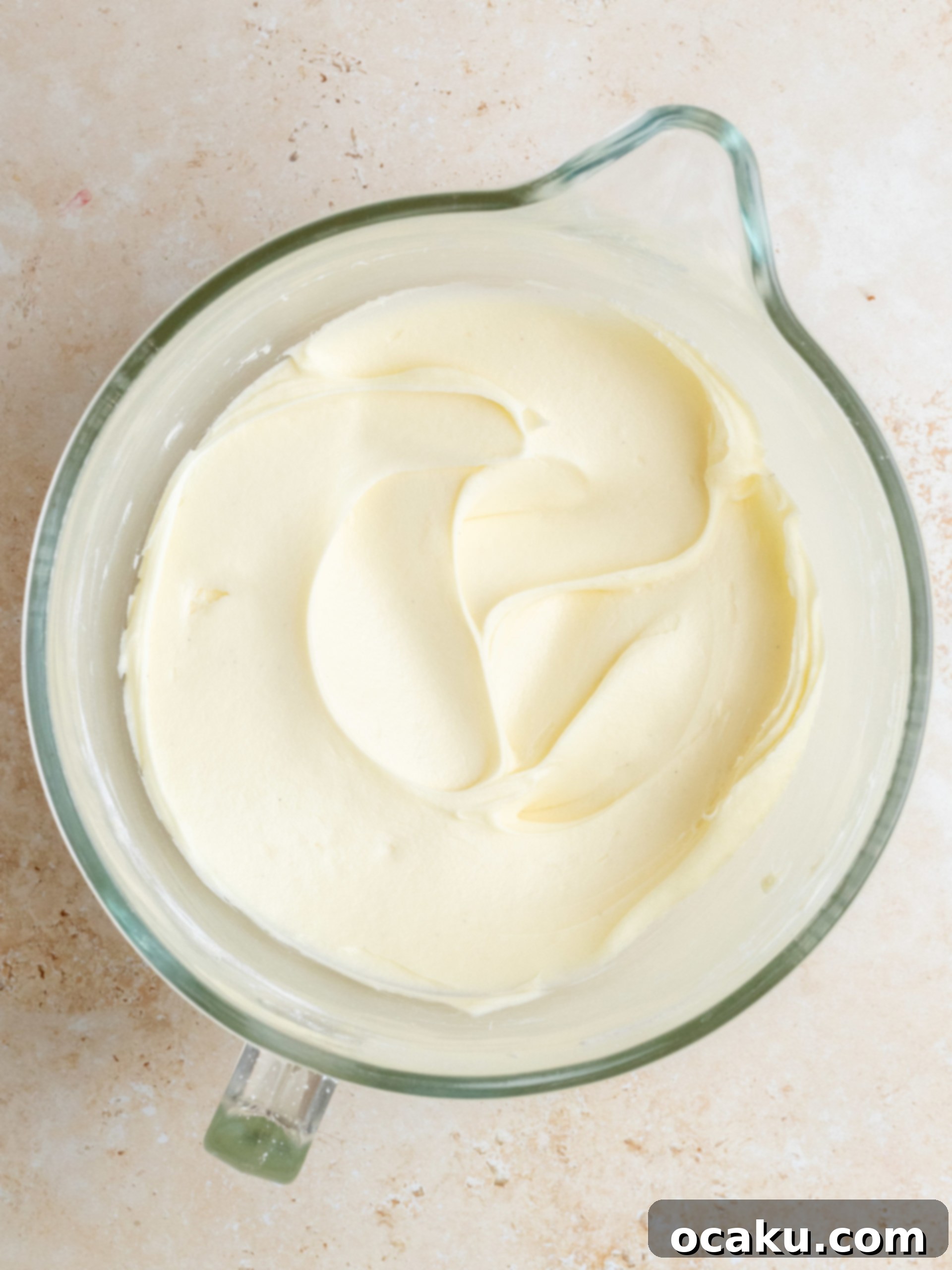
STEP 6: Prepare the Butter and Cream Cheese for Frosting. For the frosting, ensure your butter is softened and cut into cubes, and your full-fat cream cheese is slightly softened but still cool to the touch (take it out of the fridge about 10-15 minutes before starting). In your stand mixer bowl with the paddle attachment, cream the butter on high speed for 5 minutes until it’s very light and fluffy. Scrape down the sides of the bowl, then mix for another 2 minutes to ensure maximum aeration.
STEP 7: Add Cream Cheese and Flavorings. Reduce the mixer speed to medium-low. Add the slightly softened cream cheese, vanilla bean paste, full-fat coconut milk, and coconut extract to the creamed butter. Beat for about 1 minute until just combined and smooth. Be careful not to overmix the cream cheese, as it can make the frosting too thin.
STEP 8: Incorporate Powdered Sugar. Scrape down the sides and bottom of the bowl. With the mixer on its lowest speed, gradually add the sifted powdered sugar in two parts. Allow each addition to fully incorporate into the butter and cream cheese mixture before adding the next. Once all the powdered sugar is added, increase the speed to medium-high and beat for another 2 minutes until the frosting is light, fluffy, and smooth. Do not overbeat, or the frosting can become too soft.
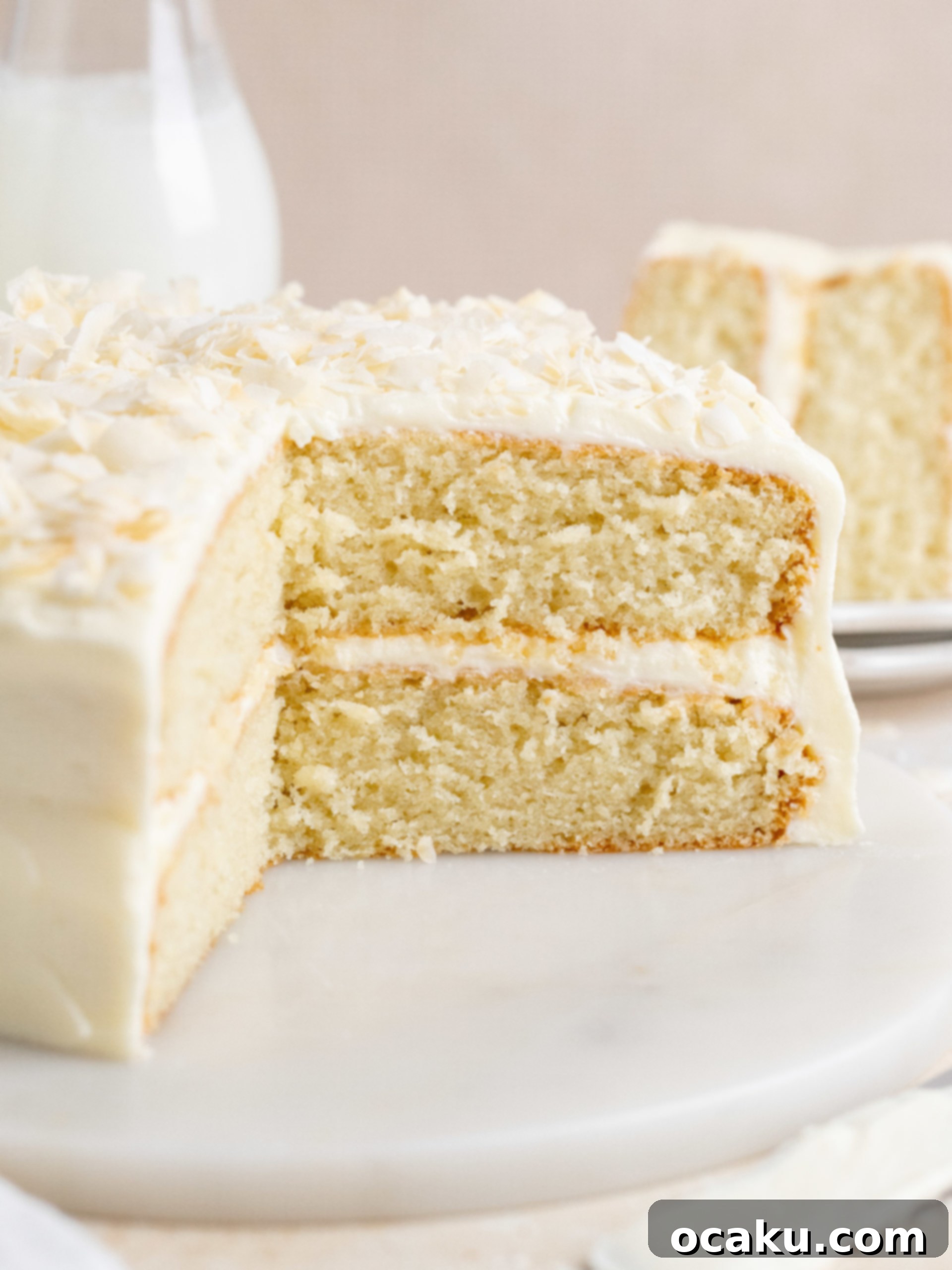
STEP 9: Assemble Your Coconut Cake. Place your first cooled cake layer onto your chosen serving dish or a cake board on a turntable (a turntable makes decorating easier but isn’t strictly necessary). Spoon about two large scoops of the coconut cream cheese frosting onto the center of this layer. Using an offset spatula, spread the frosting evenly across the top to the edges. Carefully place the second cake layer on top, aligning it as best as possible.
STEP 10: Apply the Crumb Coat and Final Frosting. Apply a thin layer of frosting all over the cake – this is your “crumb coat.” Its purpose is to trap any loose crumbs, ensuring a clean finish for your final layer of frosting. Chill the cake in the refrigerator for about 20-30 minutes to set the crumb coat. Once firm, remove the cake from the fridge and apply the remaining frosting, smoothing it evenly over the top and sides. For an extra touch of elegance and flavor, optionally decorate the top and sides with toasted coconut flakes. Serve immediately or store as directed.
EXPERT BAKING TIPS FOR THE PERFECT COCONUT CAKE
- Utilize a Kitchen Scale for Precision: For all my recipes, I highly recommend measuring ingredients by weight, especially in grams. Baking is a science, and grams offer the most precise and consistent measurements, eliminating variations that can occur with volume measurements (like cups). Using a kitchen scale will significantly improve the accuracy of your results, leading to a consistently perfect cake every time.
- Avoid Overmixing Your Batter: Once you’ve added the dry ingredients to the wet, mix only until just combined. Overmixing develops the gluten in the flour too much, resulting in a tough, dense, and dry cake. To ensure everything at the bottom of the mixing bowl is incorporated without overmixing, I always finish with a gentle fold using a rubber spatula. This technique ensures a light and tender crumb.
- Choose the Right Baking Pans: For optimal results, use aluminum baking pans that are light in color. Light-colored pans reflect heat, allowing the cake to bake more gently and evenly, which contributes to a softer, moister crumb and a lighter crust. Darker baking pans absorb more heat, which can lead to a darker, tougher crust and potentially a drier cake. Always grease your pans and line the bottoms with parchment paper for easy release.
- Bring Ingredients to Room Temperature: As mentioned in the ingredient notes, room temperature butter, eggs, sour cream, and coconut milk are crucial. They emulsify better, creating a smoother, more uniform batter, which in turn leads to a finer, more tender cake texture. Cold ingredients can cause the batter to curdle and affect the final rise.
- Cool Cakes Completely: Resist the urge to frost warm cakes! Warm cakes will melt your frosting, causing it to slide off. Ensure your cake layers are completely cool to the touch before you begin frosting. If you’re in a hurry, you can wrap cooled cake layers in plastic wrap and chill them in the refrigerator for a short period to speed up the cooling process.
FREQUENTLY ASKED QUESTIONS (FAQ)
Absolutely! This coconut cake is an excellent make-ahead dessert, perfect for reducing stress on the day of your event. You can prepare both the cake layers and the coconut cream cheese frosting the day before. For the cake layers, once completely cooled, wrap them tightly in plastic wrap (or beeswax wrap) and store them at room temperature, out of direct sunlight. For the buttercream, store it in an airtight container in the refrigerator. Before you plan to assemble and serve, allow the frosting to sit at room temperature for at least 30-60 minutes to soften. Then, give it a good re-whip in your stand mixer (or with a hand mixer) until it becomes smooth and fluffy again, ready for frosting your cake.
The most reliable way to check for doneness is by using a cake tester or a simple toothpick. After the minimum baking time specified in the recipe has passed, gently insert the cake tester into the very center of one of the cake layers. If it comes out clean, with no wet batter clinging to it, then your cake is done. If there is still wet batter, return the cake to the oven for a few more minutes and check again. Be careful not to overbake, as this can lead to a dry cake.
HOW TO STORE YOUR COCONUT CAKE
To maintain its freshness, store the frosted coconut cake in an airtight container. Because of the cream cheese frosting, it must be kept in the refrigerator. For the best flavor and texture, it’s recommended to let the cake come to room temperature for about 30-60 minutes before enjoying a slice. This allows the frosting to soften slightly and the cake layers to become more tender. The cake is best enjoyed within 1-2 days of baking and frosting, though it can last up to 3-4 days when properly stored in the fridge. For longer storage, individual slices can be wrapped and frozen for up to 1-2 months.
Other Irresistible Layer Cake Recipes To Try
- Hot Chocolate Layer Cake with Marshmallow Buttercream and Chocolate Fudge Sauce
- Banoffee Cake
- 25 Best Summer Dessert Ideas
- Lemon Raspberry Cake
If you try this delightful Coconut Cake recipe, please remember to leave a STAR REVIEW and a comment below! Your feedback helps other bakers. Also, don’t forget to tag me on Instagram @juliemarieeats to share your beautiful creations. For more baking inspiration and ideas, be sure to follow me on Pinterest!
Irresistible Coconut Layer Cake with Cream Cheese Frosting
Pin Recipe
Equipment
- 2x 20 cm (8 in) baking pan
- Stand Mixer
- Hand Mixer
Ingredients
COCONUT CAKE LAYERS
- 100 g unsweetened shredded coconut
- 260 g all-purpose flour
- ¾ teaspoon baking powder
- ¾ teaspoon baking soda
- ¾ teaspoon salt
- 180 g butter room temperature
- 300 g granulated sugar
- 4 large eggs room temperature
- 120 g sour cream room temperature
- 120 g full-fat coconut milk room temperature
- 60 g vegetable oil e.g., canola oil
- 2 teaspoon vanilla extract
- ¼ teaspoon coconut extract optional, for intensified flavor
COCONUT CREAM CHEESE FROSTING
- 300 g unsalted butter softened, cut into cubes
- 150 g full-fat cream cheese chilled but slightly softened
- 550 g powdered sugar sifted
- 1 teaspoon full-fat coconut milk
- ½-1 teaspoon coconut extract to taste
- ½ teaspoon vanilla bean paste or vanilla extract
- toasted coconut flakes for decoration (optional)
Please note: The US customary cup measurements provided serve as a rough estimate. For the most precise and consistent baking results, it is highly recommended to weigh your ingredients using a digital kitchen scale in grams. Baking is a precise art and science, where accuracy in measurements significantly impacts the final outcome.
Instructions
COCONUT CAKE LAYERS
- Preheat your oven to 170ºC (340ºF) for a conventional oven. Prepare two 20 cm (8-inch) round baking pans by greasing them and lining the bottoms with parchment paper.
- Start by blending the unsweetened shredded coconut in a food processor or blender until it reaches a fine, flour-like consistency.100 g unsweetened shredded coconut
- In a medium bowl, sift together the blended coconut, all-purpose flour, baking powder, baking soda, and salt. Whisk to combine and set aside.260 g all-purpose flour, ¾ teaspoon baking powder, ¾ teaspoon baking soda, ¾ teaspoon salt
- In a large bowl, using an electric hand mixer or a stand mixer with the paddle attachment, cream together the room-temperature butter and granulated sugar on medium-high speed for 3 minutes, until light and fluffy.180 g butter, 300 g granulated sugar
- Add the large eggs two at a time into the mixture, beating until just combined after each addition. Scrape down the bowl as needed.4 large eggs
- Reduce mixer speed to low. Add half of the dry ingredient mixture (from Step 2) and mix until just combined, being careful not to overmix.
- Next, add the room-temperature sour cream, full-fat coconut milk, vegetable oil, vanilla extract, and coconut extract. Mix on low speed until just combined. Then, add the remaining half of the dry ingredients and mix until the batter is smooth and fully combined.120 g sour cream, 120 g full-fat coconut milk, 60 g vegetable oil, 2 teaspoon vanilla extract, ¼ teaspoon coconut extract
- Using a rubber spatula, give the batter a final gentle fold to ensure all ingredients from the bottom and sides of the bowl are fully incorporated.
- Divide the cake batter evenly into the two prepared pans. Bake for 20-23 minutes, or until a cake tester inserted into the center comes out clean.
- Let the cakes cool in their pans on a wire rack for 10 minutes. Then, gently remove the cakes from the tins and continue cooling completely on the wire rack before frosting.
COCONUT CREAM CHEESE FROSTING
- Ensure your unsalted butter is softened and cut into cubes. Take your full-fat cream cheese out of the fridge 10-15 minutes before starting (it should be slightly chilled but pliable). Sift the powdered sugar to remove any lumps.300 g unsalted butter, 150 g full-fat cream cheese, 550 g powdered sugar
- In your stand mixer with the paddle attachment, cream the softened butter on high speed for 5 minutes until very light and fluffy. Scrape down the sides of the bowl, then mix for another 2 minutes.
- Add the slightly softened cream cheese, vanilla bean paste, full-fat coconut milk, and coconut extract. Cream it together with the butter for 1 minute until smooth and combined.1 teaspoon full-fat coconut milk, ½-1 teaspoon coconut extract, ½ teaspoon vanilla bean paste
- Scrape down the sides of the bowl. On low speed, gradually add the sifted powdered sugar in 2 parts, ensuring each part is fully incorporated before adding the next. Once all sugar is added, scrape the bowl again and beat on medium-high speed for a final 2 minutes until the frosting is light and fluffy.
ASSEMBLING THE CAKE
- Place the first cooled cake layer on your chosen serving dish or cake board. A cake turntable can make decorating easier, but it’s optional.
- Add about 2 large scoops of frosting onto the center of the first layer and spread it evenly with an offset spatula. Place the second cake layer on top. Apply a thin layer of frosting over the entire cake (top and sides) to create a “crumb coat.” This traps any loose crumbs. Chill the cake in the refrigerator for 20-30 minutes to set the crumb coat firmly.
- Once the crumb coat is set, remove the cake from the fridge. Apply the remaining frosting, spreading and smoothing it evenly over the top and sides of the cake. Optionally, decorate the cake with toasted coconut flakes for a beautiful finish.